Why Haven't the Tariffs Had More Impact on the Economy?
Dan Drezner recently noted the following in relation to why the Trump tariffs haven't had a more negative impact on the U.S. economy:
What about the overall effect of Trump’s tariffs on the U.S. economy? As to that question, a separate Ana Swanson story provides an extremely plausible explanation for the moderate damage: it turns out that Trump’s statutory tariff rates are much higher than the effective tariff rates.
The Ana Swanson story explains that the effective tariff rates are lower than the statutory ones because there have been "exemptions for certain countries and industries, rates that were lowered for some goods by the time they arrived in the U.S. and evasion of the rules by some companies."
At the risk of getting into areas where I have insufficient expertise, I want to point to another explanation for why tariffs haven't had a bigger impact: The continued high levels of deficit spending by the U.S. federal government, which to me seem like a "permanent stimulus" fiscal policy.
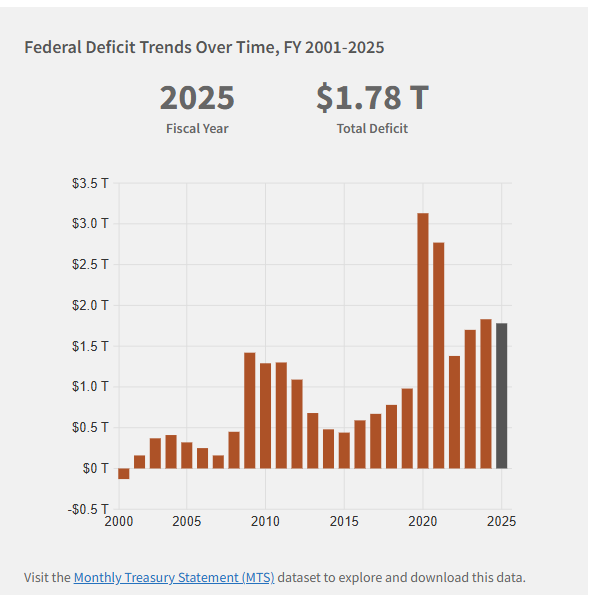
Take a look at the following chart of U.S. federal budget deficit levels in recent years:
And for budget deficits as a percentage of GDP, see this chart:
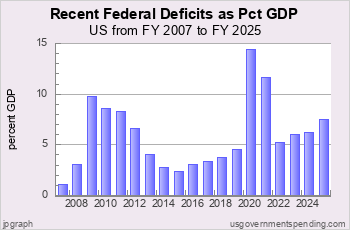
See here and here for other ways to display the same data.
Based on this data, here's the recent U.S. fiscal policy story as I see it. After the initial Obama stimulus plan during the financial crisis, the U.S. budget deficit came down significantly. Then in Trump's first term, it started moving up again. When the pandemic hit, the deficit went up sharply, first under Trump and then under Biden. After the pandemic ended, the deficit came down from its pandemic levels, but has remained at historically high levels for a time other than a war or economic recession.
Where exactly should the federal deficit be at the moment? That's highly contested and I don't have a definitive answer. But clearly we are at a relatively high point for the deficit level in a period of economic growth.
A fiscal stimulus at such high levels can keep the economy running at a solid growth rate for a while. How long exactly? No one knows! It can do it until suddenly it can't.
Anyway, turning back to the tariffs, I think it's probably well accepted that fiscal policy has a much bigger impact on the economy than tariffs, especially when your economy is one like the U.S. in which trade is a relatively small component. As a result, part of the explanation here is that the negative impact of Trump's tariffs on the economy has been lessened by the significant fiscal stimulus provided through the very high U.S. federal budget deficit.